You Don't Need More Sleep. You Need Sleep That Works.
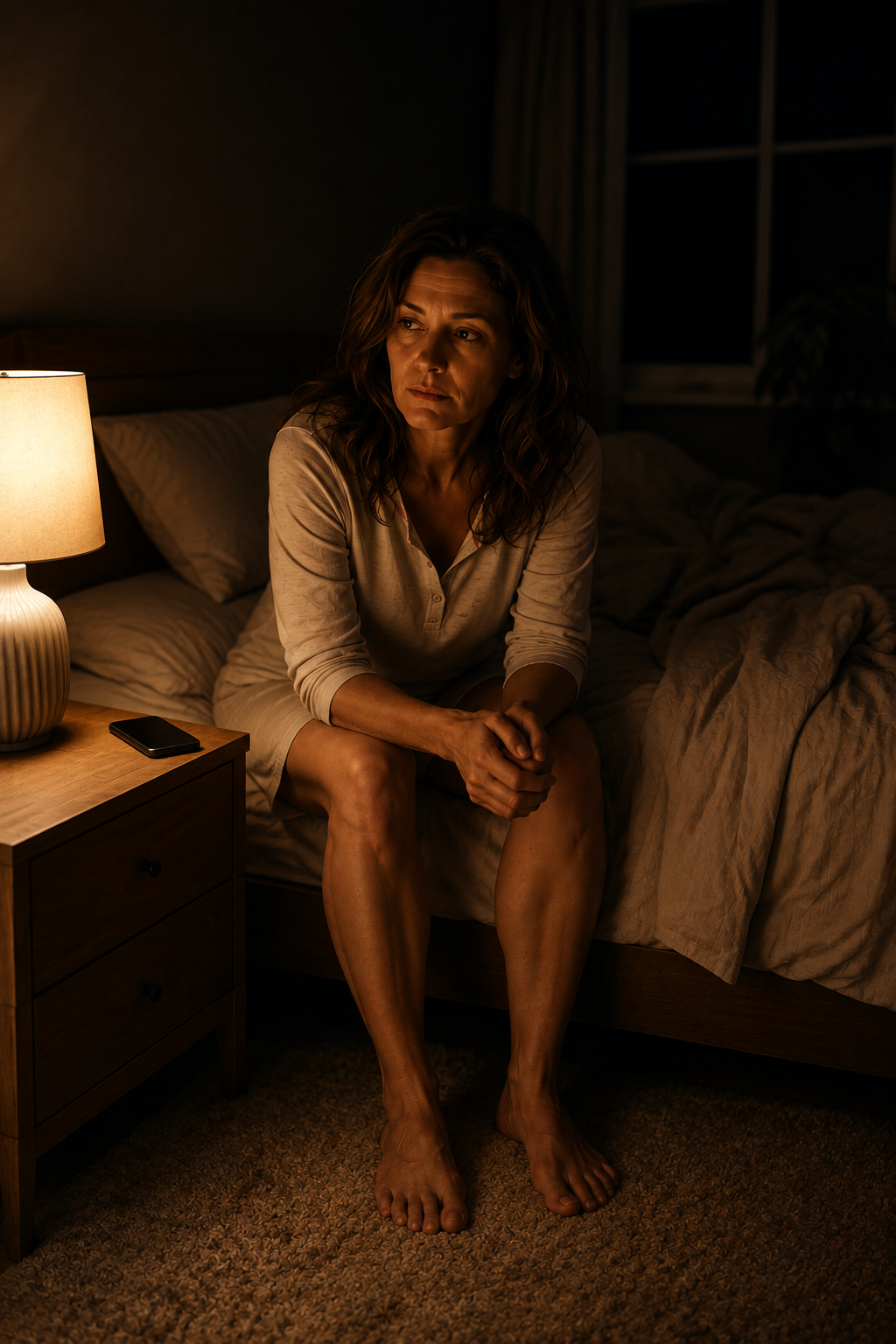
You did everything right last night.
In bed by 10:00 PM. Phone face down and charging across the room. Alarm set for 6:00 AM. That's eight hours. That's the number every article, every app, and every doctor's visit has been handing you for 15 years.
The alarm goes off and you lie there a second doing the math, because it doesn't come out right. Eight hours. And you feel like you got four.
So, you get up. You start the coffee. You write it off as a bad night, the same way you wrote off the one before it.
There have been a lot of bad nights.
And that's the morning. Foggy, patched together with caffeine, before it's even started.
Nobody ever asked what happened during the eight hours
Here's the thing about eight hours.
It's an input. It's the easiest number in this entire business to measure, which is exactly why it became the one everybody chases. You can count it on a watch. You can put it in a chart. You can feel like you've done your part at 10:00 PM.
But your body doesn't grade you on how long you were lying down.
Sleep isn't a container you fill. It's work. It's a shift your body runs. Tissue gets repaired. Hormones get sorted back out. The day gets filed into something you can pull back out tomorrow. Metabolic waste gets cleared out of your brain.
Eight hours in bed is the window that work is supposed to happen in.
It isn't the work.
And you can spend the whole window with a nervous system that never actually clocked out.
Tired but wired
You know the feeling even if nobody ever gave you a name for it.
You're exhausted. Genuinely, physically done. And then you get horizontal and something in you goes: not yet.
The email you meant to send. The thing you said in the 2:00 PM meeting, replayed twice. Tomorrow's list, assembled in the dark, in order, unasked for.
You're tired. Your body just isn't off.
That isn't a discipline problem, and you're not imagining it. Your nervous system runs roughly two modes: the one that gets you through the day, and the one that runs the repair. Live the life you're living and you spend most of the day pinned in the first one, on cortisol and coffee. Then you get into bed and expect the switch to flip because the lights went out.
It doesn't flip. It winds down. And if it never fully winds down, you can lie there nine hours and still get a night that only half happened.
You can spend eight hours in bed and still not get the night your body needed.
Which is why more of it doesn't fix it
This is the part that makes people feel a little crazy.
So, you add an hour. You go to bed at 9:00 PM like a responsible adult. You're in bed nine hours instead of eight, you wake up feeling about the same or slightly worse, and now you've also handed over the one quiet hour you had for the privilege.
You made the window longer. You didn't change what happens inside it.
More of something that isn't working is just more of something that isn't working.
One honest note before I go on.
If you're running on five hours because of a newborn, or a night shift, or a season that just isn't handing you the time, then yes, more hours would help. I'm not going to pretend otherwise.
But you probably can't go get them. Not right now.
Which is exactly when what happens inside the hours you do get matters most. Fewer hours means every one of them has to carry more. So this is about those hours either way.
The question I'd actually go looking at
Not a number. A question. What is your body doing at 2:00 AM?
Do you go under fast and then surface at 3:00 AM like clockwork? Does it take you an hour to fall asleep in the first place? Or do you sleep the whole night, technically, and wake at 6:00 AM like you never went to bed?
Those are three different nights. None of them is really a quantity problem, and moving your bedtime earlier doesn't reliably touch any of them.
One honest flag before I go further, because some of this belongs to a doctor and not to me. If you snore heavily and wake up gasping, if someone has watched you stop breathing in your sleep, or if the exhaustion keeps getting worse no matter what you change, get your sleep properly looked at. Sleep apnea is common, it's badly underdiagnosed, and nothing on a supplement shelf touches it.
And if the flat, heavy version of this has been sitting on you for weeks, low mood and no interest in things you used to want, that's worth saying out loud to a doctor too. Exhaustion and depression can look a lot alike from the inside, and that's not a call to make by yourself at 11:00 PM.
What OVRNITE is actually for
This is the gap it was built for. Not more hours. The wind-down that's supposed to come before them.
No melatonin, because melatonin is a timing hormone. It tells your body when to sleep. It has nothing to say about why you can't.
No sedatives either, which hold you still while the night's work goes half done.
Two capsules, built to support your body's own transition out of the day. That's it. The repair and the filing aren't things a capsule does for you. They're your biology's job. This is about helping it get to the point where it can start.
I'm not going to tell you which night you'll notice something, and I'd be careful with anybody who does. When it does start to shift, the evening tends to go first. The hour before bed stops being a fight.
You don't need more sleep.
You need the sleep you're already getting to do something.
Feeling like yourself doesn't happen overnight. It starts there.